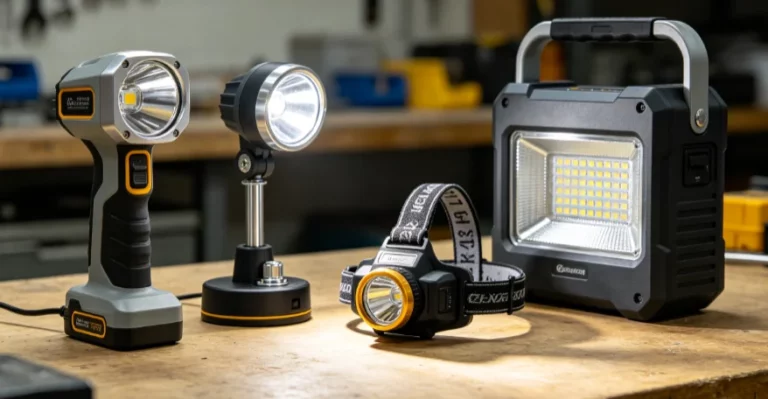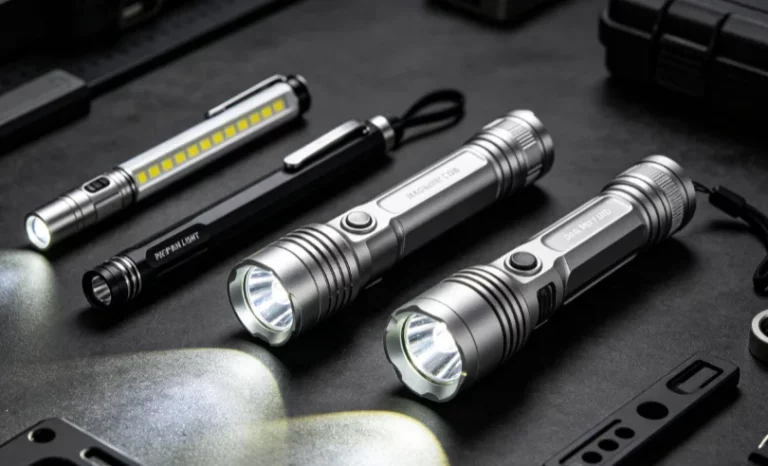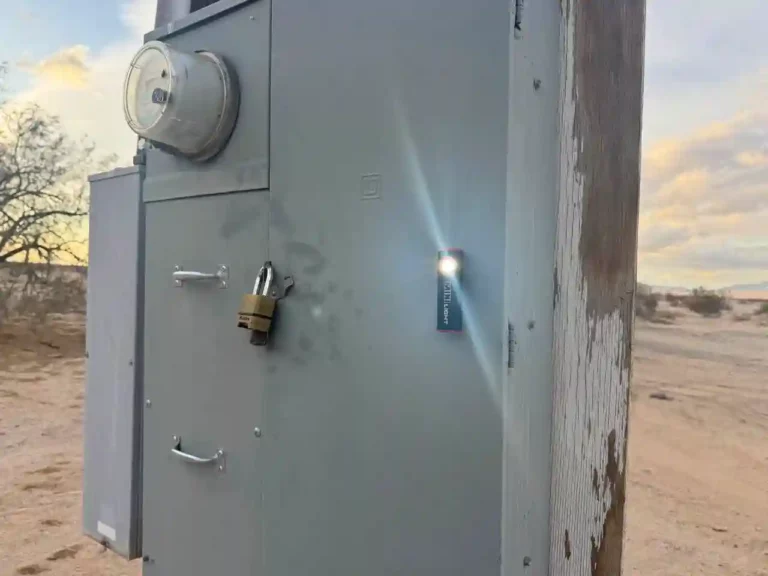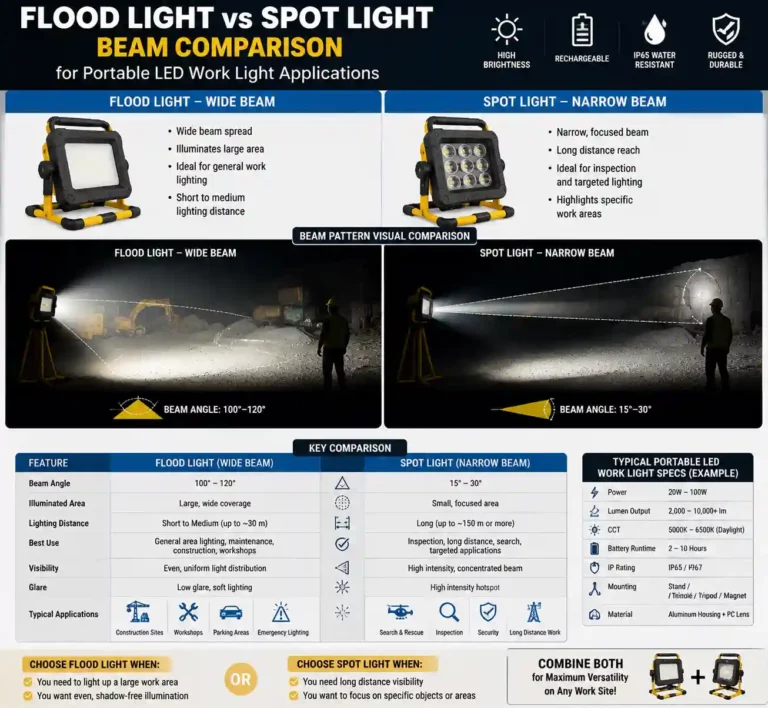
A COB work light and an LED spotlight solve different lighting problems. A COB work light spreads light across a nearby work area, while an LED spotlight concentrates light on a smaller target at a greater distance. The right work light depends on working distance, coverage, beam control, mounting, and how long the light must run. HOKOLITE is a portable lighting manufacturer with over 20 years of experience, providing OEM and ODM services for work lights, flashlights, headlamps, and outdoor lighting products.
Use the comparison below to match each light to repair, inspection, construction, maintenance, or outdoor work.
COB means chip on board. Multiple LED chips are mounted closely on one substrate, creating a compact light-emitting area. In a work light, that source is commonly paired with a flood optic or diffuser to illuminate a broad nearby surface.
A broad beam places light across a bench, engine bay, cabinet, panel, or floor area. You can see several parts at once and follow a cable route. Beam width varies by product, so review the beam pattern and usable distance beyond the LED type.
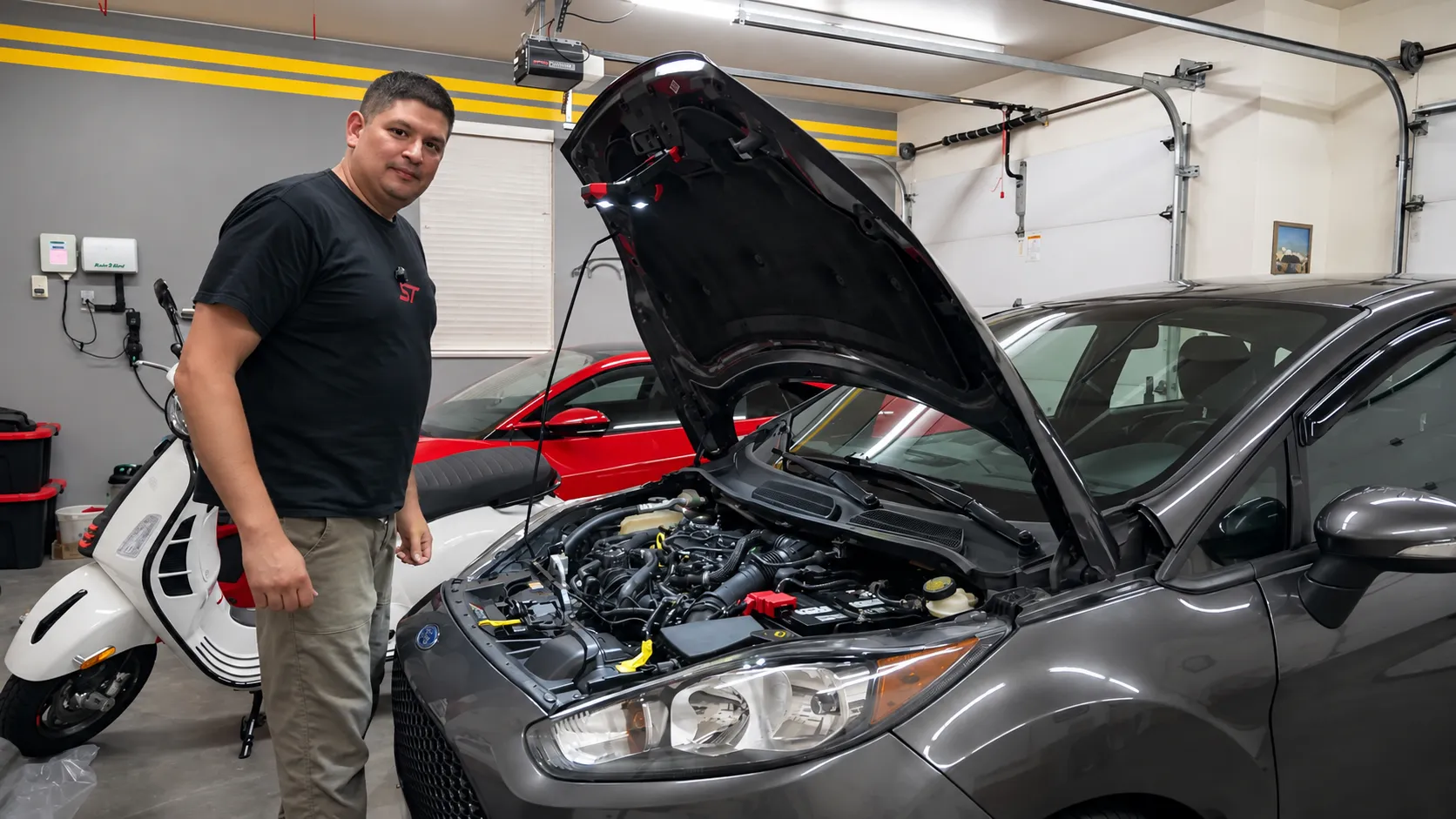
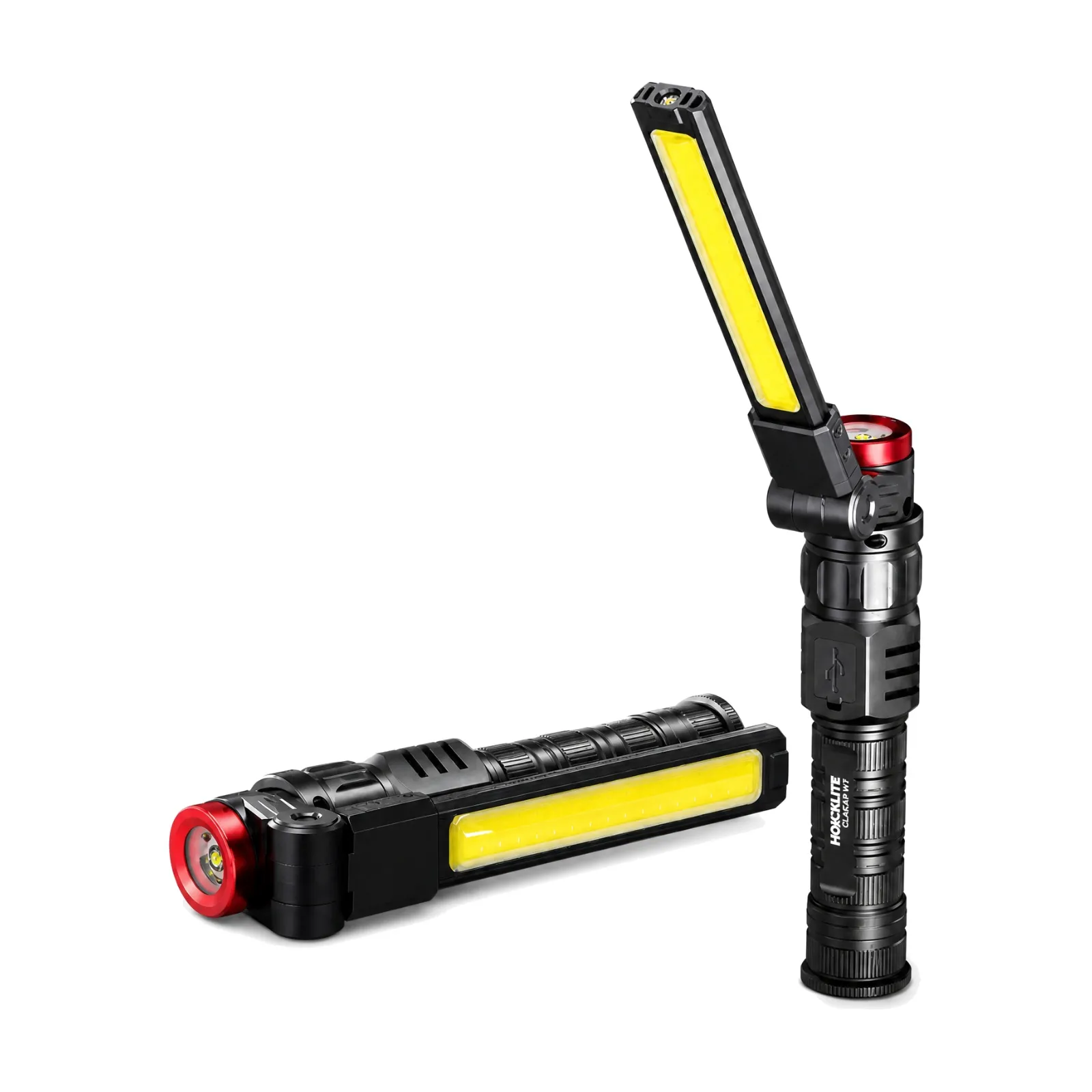
COB work lights suit close-range repair, assembly, maintenance, vehicle servicing, and general task lighting. A rotating panel, magnetic handle, hook, or stand can keep the light in position while both hands remain available.
HOKOLITE model 1920 uses two 5 W COB flood panels. It reaches a maximum of 1,000 lumens and includes rotating panels, a 360-degree stand, magnetic handles, USB-C charging, and a 4,000 mAh battery. Those details support workbench, vehicle, and equipment inspection setups where coverage and placement matter.
An LED spotlight sends light through a narrower optical path. The beam covers a smaller area and keeps more of the light directed toward a selected point. This arrangement supports target identification at a longer distance.
A focused beam can help you inspect a roof edge, trail, machine component, sign, or outdoor boundary from a distance. The useful specification is the tested beam distance under a stated method. Maximum lumens alone do not describe how tightly the light is directed.
Spotlights suit outdoor search, long-distance inspection, route finding, and tasks where one target needs attention. A handle or adjustable stand helps you keep the beam on that target. A tripod interface can help when the light must stay pointed in one direction.
| Comparison point | COB work light | LED spotlight |
| Optical data to verify | Beam angle, uniformity, and illuminance across the task surface | Beam angle, center intensity, spill, and tested beam distance |
| Output validation | Sustained output and surface coverage after thermal step-down | Sustained center-beam intensity and runtime by mode |
| Mechanical checks | Panel articulation, magnet or hook strength, stand stability | Aiming stability, handle or stand control, tripod compatibility |
| Power-system checks | Battery capacity, charging time, runtime, replaceability | Battery capacity, charging time, high-mode runtime, protection circuit |
| Environmental checks | IP test conditions, impact resistance, operating temperature | IP test conditions, impact resistance, operating temperature |
| Purchase decision | Acceptance criteria for the required work area and mounting method | Acceptance criteria for identification distance and aiming control |
The table focuses on specifications that affect sourcing, validation, and field use. Combination models may use both beam patterns, so buyers should verify each mode separately.
Repair and assembly buyers should test illuminance uniformity across the required work surface, panel adjustability, mounting stability, and shadow control. Model 1920’s two COB panels and rotating structure provide a reference configuration for workbench, vehicle, and equipment tasks.
Long-range inspection buyers should specify the required identification distance, center-beam intensity, spill-light tolerance, and aiming stability. Model 6740 uses three 5 W P8 OSRAM LEDs, reaches approximately 1,200 lumens, and has a stated beam distance of up to 900 m. Its adjustable stand and 1/4-inch tripod interface support fixed directional use.
Treat the 900 m value as a stated maximum. Sample approval should record the beam-distance test method and the minimum usable light required at the target.
For mixed work areas, buyers can evaluate whether one dual-beam SKU can reduce inventory and training requirements. HOKOLITE model 0083 combines a 20-degree spot LED with a flood LED and provides flood, spot, and dual modes. It reaches a maximum of 800 lumens and includes a rotating handle, hook, magnetic base, and IPX4 rating. Each mode should be checked for runtime, thermal step-down, and switch sequence during sample testing.
The LED package is one part of the decision. Review the complete light:
– Beam angle and usable coverage at the working distance
– Maximum output and sustained output after thermal control acts
– Battery capacity, charging input, and runtime by mode
– Stand, hook, magnet, handle, or tripod mounting
– IP rating and the conditions covered by that rating
– Weight, grip, switch access, and transport requirements
Handheld use lets you follow a moving target. A stand gives a fixed pool of light. A magnet works on a compatible steel surface, while a hook can suspend the light above a compartment. The mounting option can change the final result as much as the LED arrangement because it determines where the beam stays during the task.
HOKOLITE’s examples show three configurations:
– Model 1920: two 5 W COB flood panels, maximum 1,000 lumens, 4,000 mAh battery, rotating panels, 360-degree stand, magnetic handles, and USB-C charging.
– Model 0083: 20-degree spot plus flood, three modes, maximum 800 lumens, thermal step-down, USB-C charging, operation while charging, IPX4, magnetic base, rotating handle, hook, and 193 g weight.
– Model 6740:three 5 W P8 OSRAM LEDs, approximately 1,200 lumens, stated beam distance up to 900 m, IP66, 6,600 mAh battery, adjustable stand, tripod interface, and 698 g weight.
These specifications describe different coverage, distance, and placement options. Lumen value alone does not rank them for every job. Sample testing should record beam shape, mounting stability, operating time, and sustained output for the intended job.
Use a documented purchase specification and sample-approval process:
Ask the supplier for beam-angle and beam-distance methods, maximum and sustained output, runtime by mode, thermal-control behaviour, battery cell and protection details, charging input, IP test conditions, and mounting-load limits. For a private-label program, define the approved sample, inspection level, logo and colour tolerances, packaging, labels, spare parts, warranty handling, lead time, and target-market documents before mass production.
HOKOLITE supports OEM and ODM customization for brand, logo, colour, manuals, packaging, optical configuration, electronics, and mounting accessories. Buyers can use a signed sample and a written acceptance checklist to control beam performance, assembly, finish, labelling, and pack-out.
A B2B purchase decision should convert the job requirement into measurable acceptance criteria. Specify working distance, illuminated area, sustained output, runtime, thermal behaviour, mounting, battery documentation, environmental protection, and pack-out requirements before approving a model. A dual-beam configuration may be suitable when one SKU must support multiple operating distances, subject to mode-level testing.
HOKOLITE supplies COB flood, spot, and combined configurations across models 1920, 0083, and 6740. For model selection and sample testing, submit the working distance, target area, duty cycle, mounting surface, order quantity, packaging requirements, and destination-market documents to the HOKOLITE contact team.
Pytanie 1: Is a COB work light brighter than an LED spotlight?
A: Brightness depends on the model and measurement conditions. Compare lumens, beam angle, beam distance, and sustained output together because a wider beam and a tighter beam distribute light differently.
Pytanie 2: How should a commercial buyer validate beam performance?
A: Define the working distance and target area, then measure illuminance and uniformity on the actual task surface. Record beam angle, center intensity, spill, shadows, mounting position, and sustained output after thermal control acts.
Pytanie 3: What documents and controls should be confirmed before mass production?
A: Confirm the approved sample, specification revision, IP test conditions, battery and target-market documents, inspection criteria, colour and logo tolerances, packaging, labels, spare-parts plan, warranty process, and production lead time.
Pytanie 4: Can one work light provide both flood and spot beams?
A: Yes. HOKOLITE model 0083 combines a 20-degree spot LED with a flood LED and offers flood, spot, and dual modes. Its maximum output is 800 lumens, with thermal step-down in the high modes.
Pytanie 5: What specifications should you compare before buying a work light?
A: Compare optical test data, sustained output, runtime by mode, thermal control, battery and charging details, mounting strength, weight, and IP test conditions. Commercial orders should also define the approved sample, inspection criteria, packaging, labels, compliance documents, warranty handling, and lead time.