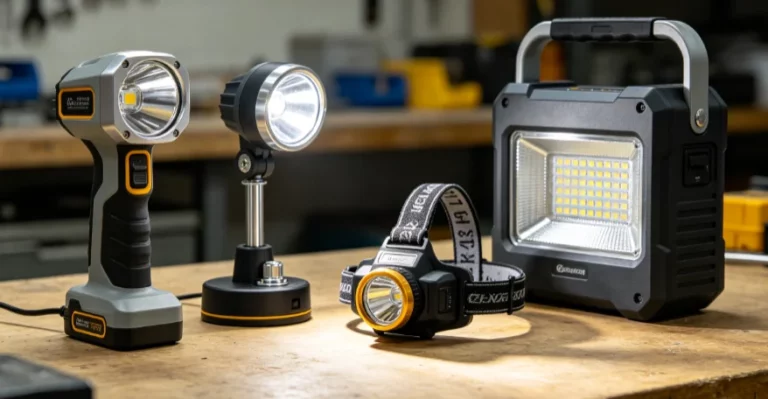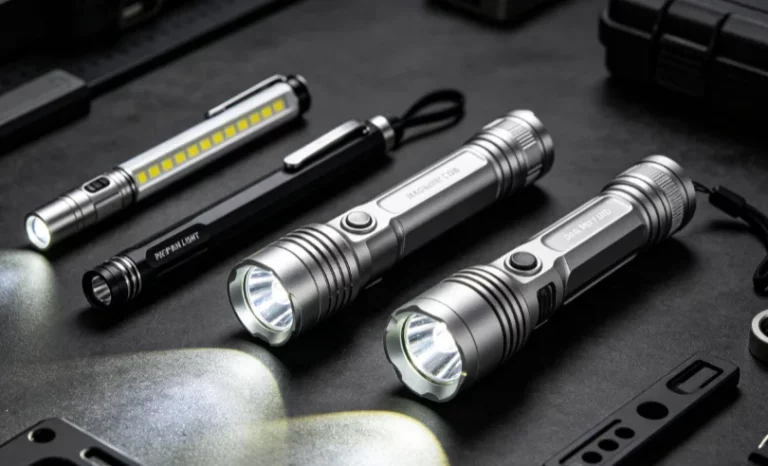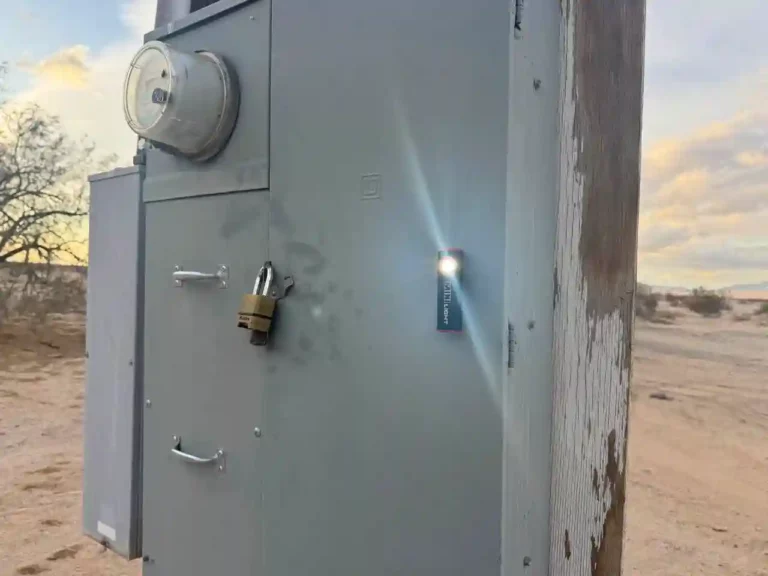
A work light supports workplace productivity by providing reliable illumination where repair, inspection, assembly, and field tasks take place. Proper task lighting helps workers identify parts, read labels, and aim tools with greater accuracy.
Choosing the right work light goes beyond brightness alone. Factors such as beam pattern, mounting options, sustained output, runtime, charging access, and environmental protection should match the working distance and site conditions. A well-designed portable LED lighting solution helps maintain a safer, smoother, and more efficient workflow in demanding environments.
HOKOLIET provides professional lighting solutions designed for construction sites, industrial facilities, and maintenance teams. Its durable LED work lights are built to enhance visibility, improve productivity, and support safer operations in challenging work environments.
The following six applications demonstrate how portable LED lighting helps professionals improve efficiency and maintain consistent performance across different job sites.
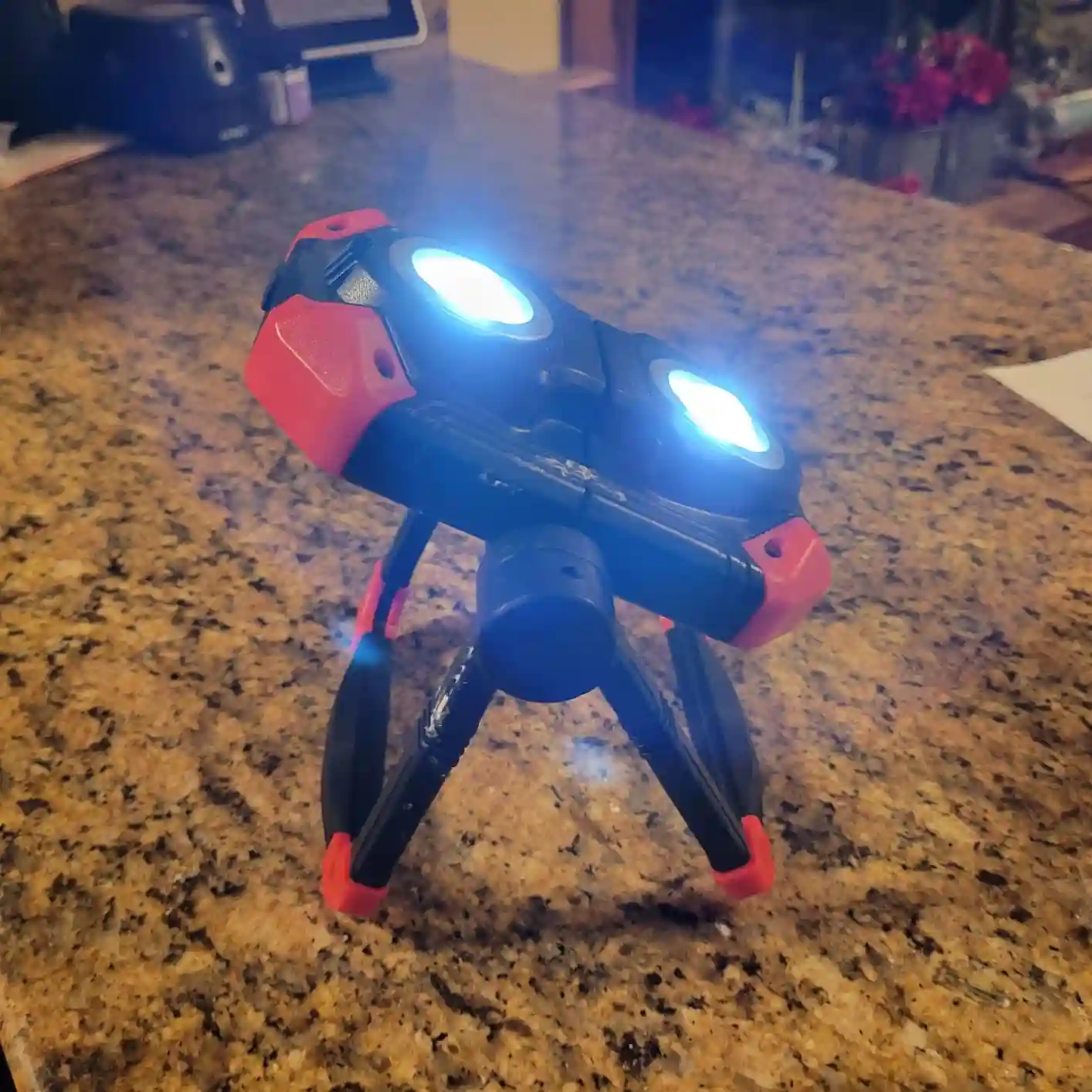
Maintenance work often happens below a vehicle, inside a cabinet, behind equipment, or across a crowded bench. General room lighting may leave shadows around fasteners, wiring, surface marks, and labels. A portable work light lets you aim local illumination at the component and adjust it as the task moves.
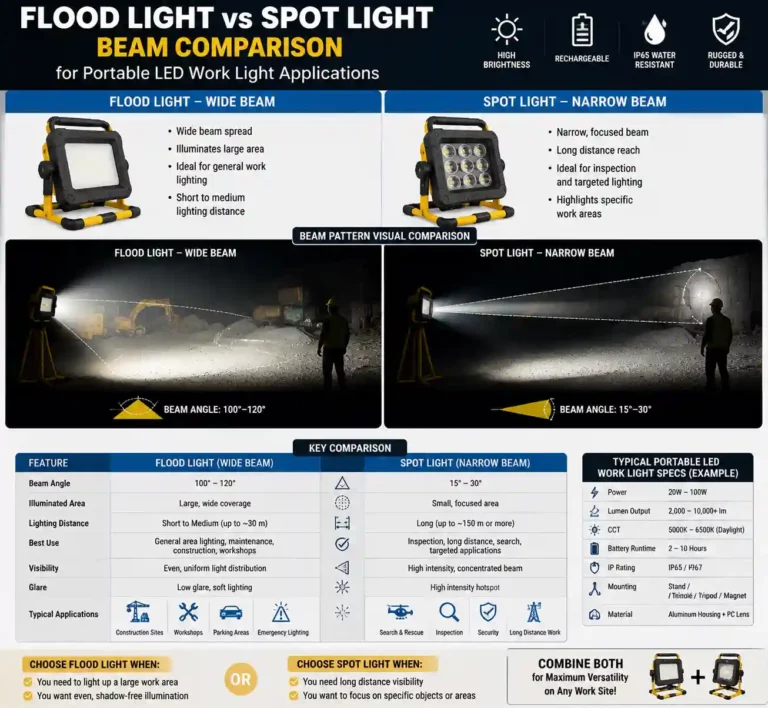
A flood beam spreads light across a nearby surface, making it suitable for engine bays, workbenches, panels, and assembly areas. HOKOLITE model 1920 uses two 5 W COB flood panels and reaches a maximum output of 1,000 lumens. Its rotating panels and 360-degree stand let you change the coverage and angle for close-range work.
Holding a flashlight occupies a hand needed for parts, tools, or cables. Magnetic bases, hooks, clips, rotating stands, and tripod mounts keep both hands available. Review the HOKOLITE werklampenassortiment after identifying the available surfaces.
A magnet suits steel machinery, vehicle panels, and cabinets. A hook can suspend a light above a compartment, while a clip can attach to a bench edge. A stable stand serves floors and open areas. Model 1920 adds rotating magnetic handles, and model 6740 includes an adjustable stand with a 1/4-inch tripod interface. Each arrangement should be tested on the actual surface during sample approval.
Inspection distance changes during a shift. A technician may scan a wider compartment, then focus on a connector or a point farther away. Flood light covers the nearby area; spot light concentrates illumination on a smaller target. A dual-source design gives you both patterns in one tool.
HOKOLITE model 0083 combines a flood LED with a 20-degree spot LED and provides flood, spot, and dual modes. It reaches a maximum of 800 lumens in dual high, then steps down to 300 lumens after two minutes. Its single-light mode starts at 400 lumens and steps down to 150 lumens after two minutes. These figures show why sample evaluation should record sustained output as well as the initial setting.
A rechargeable work light for job sites can move among vehicles, machines, warehouse zones, and temporary work areas where a fixed outlet is inconvenient. Battery power also removes a trailing cable from the immediate task area. Portability still depends on size, weight, runtime, and how often the team must reposition the unit.
Runtime should match the setting used during the job. Model 1920 has a 4,000 mAh battery and is rated for four hours at its 1,000-lumen dual-high mode or seven hours at the 550-lumen single mode. Model 0083 uses USB-C charging and can operate while charging. A sample test should cover the intended mode, shift length, charge time, battery indication, and output changes during operation.
Loading areas, roadside tasks, field maintenance, and construction work add distance and exposure to dust or water. An LED work light for industrial use needs a beam that reaches the target and a model-specific ingress rating suited to the site. A portable work light for workplace safety also supports hazard recognition, while site procedures, barriers, and personal protective equipment remain part of the safety plan.For construction environments, adequate illumination is also an important workplace safety requirement.
Model 6740 is a long-distance spotlight with three 5 W P8 OSRAM LEDs, a maximum output of approximately 1,200 lumens, and a stated beam distance of up to 900 metres. It carries an IP66 rating and weighs 698 g as a lamp. This format suits distant targets and open field placement. Close repair work usually benefits from a broader flood pattern and a lighter mounting format.
Small controls can preserve the work rhythm when power or placement changes. Battery indicators show when charging should be scheduled. Quick-off and memory functions reduce repeated switch cycles. Operation while charging supports a fixed station, and a power-bank function can supply a mobile device during field or emergency work when the model provides it.
Prioritize daily functions. A mechanic may value magnetic placement and a rotating panel; an inspector may need separate spot and flood modes; an outdoor team may need a stable stand, ingress protection, and a battery indicator. Compare the categorieën draagbare verlichting by the team’s actual workflow.
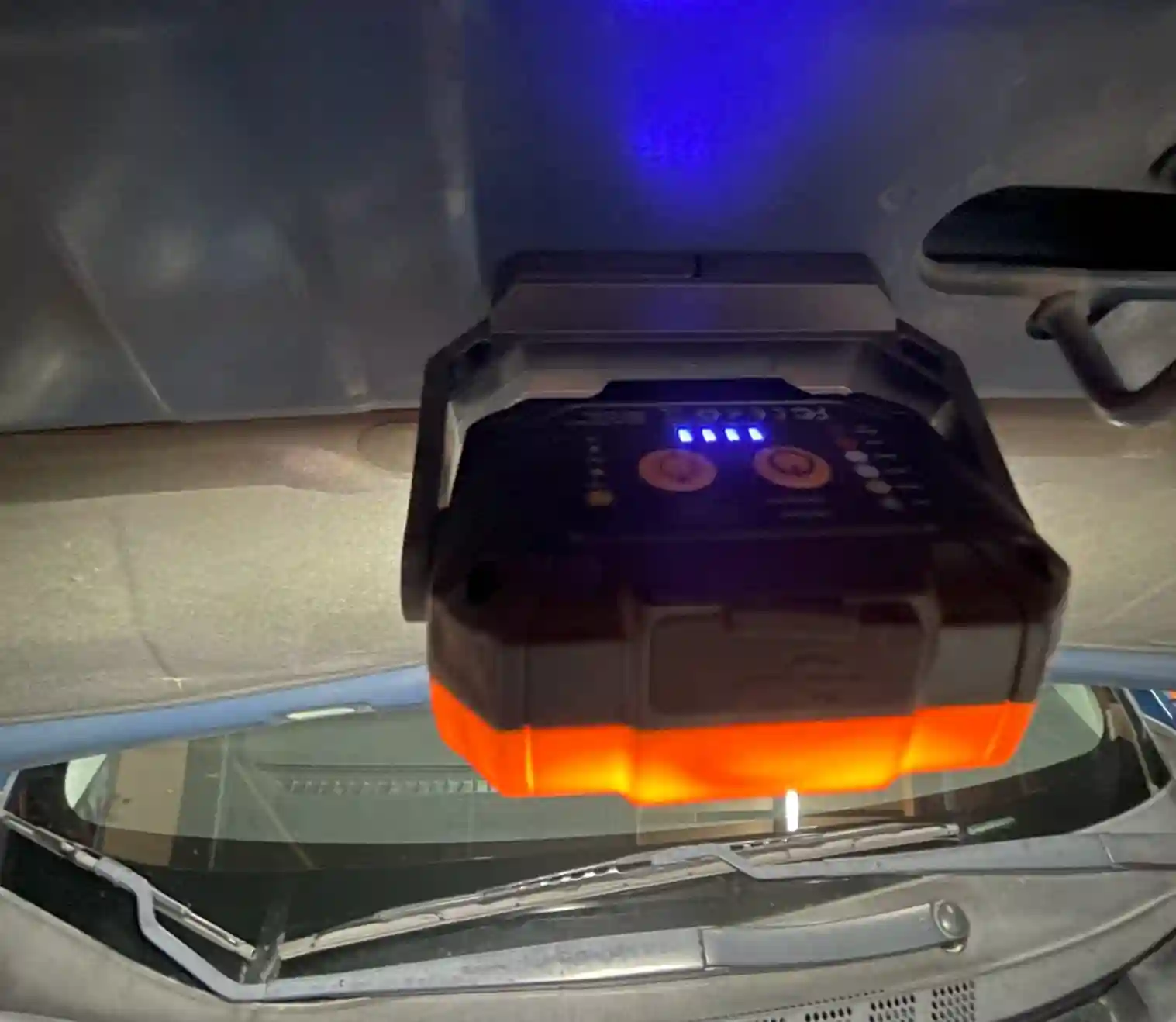
Lumen output provides one part of the decision. The task also defines beam shape, placement, operating time, carrying weight, and exposure. Use the table as a short selection brief before comparing models.
| Work condition | Beam | Plaatsing | Power and runtime check | Environmental check |
|---|---|---|---|---|
| Bench, cabinet, or engine-bay work | Broad flood | Magnet, hook, or rotating stand | Sustained output at the daily mode | Heat, splash, and contact surfaces |
| Mixed-distance inspection | Flood and spot | Compact magnet or hook | Step-down, charge time, operation while charging | Confined-space placement and moisture |
| Warehouse or temporary work zone | Uitgebreide dekking | Stable floor stand or tripod | Shift duration and battery indication | Dust, traffic, and storage conditions |
| Roadside or field task | Spot or dual beam | Stable stand, tripod, or magnetic base | Runtime, charging access, auxiliary power | Model-specific ingress rating and weight |
The model examples serve different jobs. Model 1920 provides adjustable dual-COB flood coverage. Model 0083 combines spot and flood output in a compact 193 g body with an IPX4 rating, magnetic base, rotating handle, and hook. Model 6740 addresses long-distance outdoor viewing with a stand and tripod interface. Product selection should start with the work condition and then move to a sample test.
A useful buyer brief records the application, working distance, coverage area, mounting surfaces, required runtime, charging method, environmental exposure, quantity, target market, branding, manual, packaging, and test-document requirements. These inputs give a supplier a clear basis for product matching and sample planning. Buyers can also review relevant kwaliteits- en testmogelijkheden when defining optical, battery, durability, and ingress checks.
HOKOLITE, operated by Ningbo Yinzhou Adelante Lighting Co., Ltd., develops portable lighting and supports OEM/ODM projects. Available customization in the supplied product information includes brand, logo, colour, manual, and packaging. Submit the operating conditions and commercial inputs through the work-light enquiry channel to discuss a suitable product format, sample scope, and quotation requirements.
Vraag 1: How does a work light support workplace productivity?
A: A work light places task lighting around components, tools, labels, and inspection points. The appropriate beam and mount help you keep the target visible as the work moves. Productivity results depend on the complete process, including tools, procedures, training, and site conditions.
Vraag 2: Is a flood light or spot light better for industrial work?
A: A flood light suits nearby benches, engine bays, cabinets, and assembly areas because it covers a wider surface. A spot light suits a smaller or more distant target. Teams that perform both tasks can use a dual-source light with separate flood and spot modes.
Vraag 3: How many lumens should a work light have?
A: Choose lumens together with beam pattern, working distance, mounting position, and sustained output. A high initial value can step down during operation, so review the output after the light has been running and test the mode used for the actual task.
Vraag 4: What should buyers check in a rechargeable work light?
A: Check runtime by mode, charge time, connector type, battery indication, output step-down, operation while charging, mounting stability, controls, weight, and the model-specific ingress rating. Record the acceptance conditions in the sample sheet so suppliers and buyers use the same test basis.
Vraag 5: Which work-light features matter for outdoor job sites?
A: Outdoor selection usually covers beam distance, coverage, stable placement, carrying weight, runtime, charging access, and an ingress rating suited to the expected dust and water exposure. Signal modes and power-bank output may support roadside or emergency tasks when the selected model includes them.