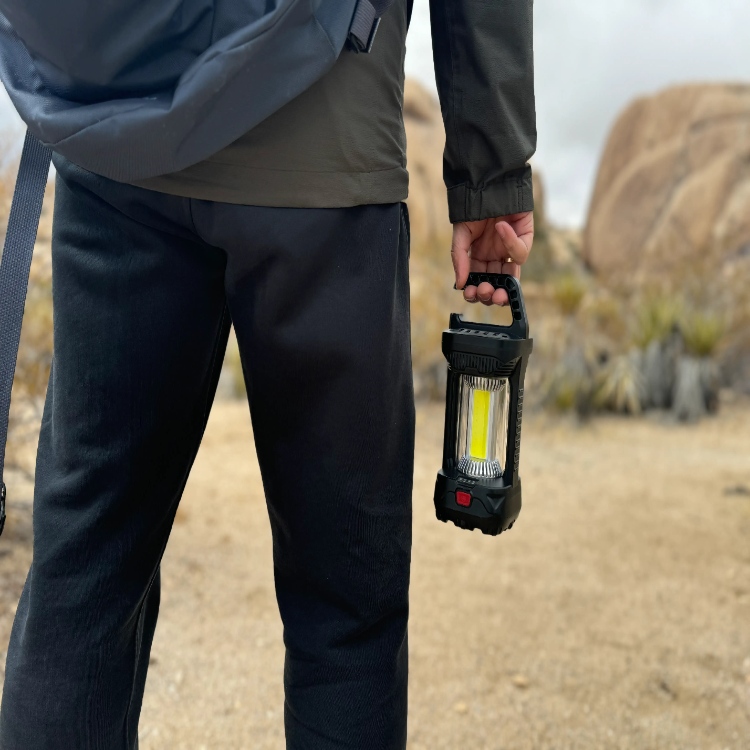
A rechargeable camping lantern may light a tent, campsite, camper van, garden table, or emergency room. For a brand, importer, or distributor, the buying task is to connect features with the intended use, product position, and supplier checks.
img.handle a Camping Lantern.webp
Brightness is useful only when it is tied to a mode and a beam pattern. Maximum lumens show the highest light output; customers may spend most of an evening on medium or low.
A lumen measures total visible light. It does not show where that light falls. A 360-degree camping lantern can spread light around a table or inside a tent, while a directional panel can put more light on one work area. A diffuser can soften glare when the lantern sits at eye level.
Ask for output by mode and the measurement method. Test a sample on a table, overhead, and near the ground to find shadows, hotspots, and glare. If top and side LEDs are separate, confirm whether they work independently or together.
The setting determines the priority. A tent light needs even close coverage, while a group campsite may need higher output and a wider spread. An emergency model should make its useful mode easy to find.
Buyers comparing light layouts can review the camping lantern product range and match the sample format to the intended setting.
Runtime changes with output level, battery capacity, circuit design, temperature, and battery condition. A useful specification states the mode, test conditions, and endpoint.
An “up to” runtime figure often describes the lowest setting. Ask for a mode-by-mode table and compare the modes customers will use most often, especially when the lantern must last a full evening.
Ask whether the test ends when the light switches off or when brightness falls to a stated level. Use one method for all shortlisted models.
Battery capacity helps explain runtime, but it does not prove operating time. Compare capacity with measured performance at a defined output and record the approved conditions in the SKU specification.
An integrated rechargeable battery suits regular use with USB charging and supports a compact design. Replaceable batteries fit longer trips where users carry spares or have limited power access. A range can offer both options.
For each Rechargeable Camping Lantern, confirm battery chemistry, capacity, charging input, connector, charge time, and status indicators. Check low-battery alerts and operation while charging if relevant.
If the cell is sealed inside the housing, clarify replacement and warranty service. If spare cells are sold separately, confirm availability and whether the original package includes them.
Transport documents depend on the battery, capacity, packaging, destination, and shipping method. Request current documents and confirm route requirements before booking.
Light color affects comfort and close tasks. Warm white suits tents and leisure areas; a brighter white mode helps users find equipment, prepare food, or inspect a campsite.
RGB means red, green, and blue light. These modes suit ambient products, while adjustable brightness reduces glare and battery use. Confirm colors, levels, and effects for each model.
Check mode order in low light and count the presses needed to reach low, high, red, or RGB modes. Record the expected sequence in the product brief.
img.hanging a lantern.webp
Charging hardware affects daily use and return rates. Check the port, protective cover, cable fit, charge indicator, charging time, and low-battery warning. Try the controls with gloves when the lantern may be used outdoors or during emergency work.
Confirm whether the lantern remembers the last selected mode or resets to a bright setting after switching off. Reset behavior can matter in a tent or shared sleeping area. Specify the expected behavior so the production sample can be checked against it.
Some models include a power-bank output. Treat it as a separate requirement because it affects battery capacity, circuit protection, packaging claims, and testing. Ask whether it works while the light is on.
An IP rating, or ingress protection rating, describes dust and water protection under defined test conditions. Match it to expected exposure: splashes, rain, wet ground, or dusty storage.
An IPX4 rating concerns water exposure and does not state a dust rating. Use the complete marking and test report for the exact model in packaging or online content.
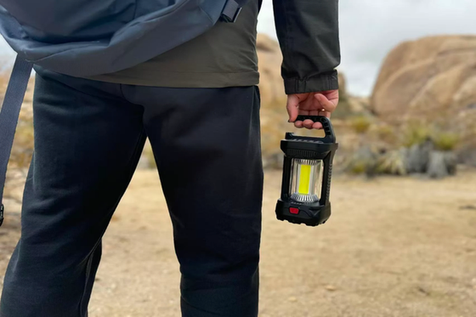
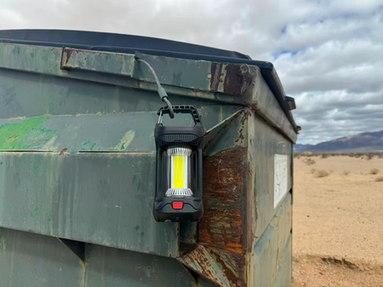
Inspect the housing, lens, seals, port cover, handle, and hanging point during sample approval. Match mounting and durability checks to the expected use.
Weight and packed size affect backpacks, emergency kits, vehicles, and retail packaging. Record both values for each SKU.
Test it on a table, overhead, and uneven ground. Check base stability and handle or hook retention. List every accessory by SKU because cables, diffusers, bags, and hooks may vary.
The specification sheet, approved sample, carton label, manual, and sales listing should describe the same configuration.
A clear brief gives the buyer, supplier, quality team, and packaging designer one reference. Record these points for every Rechargeable Camping Lantern:
Intended setting and primary customer
Output by mode, beam pattern, light color, and RGB options
Battery type and capacity, charging input, connector, and runtime conditions
Dimensions, weight, material, base, handle, hook, and included accessories
Required IP rating and documents supporting the claim
Label language, packaging, barcode, manual, and target market
Sample approval criteria, inspection plan, and change-control process
Separate required functions from optional ones. RGB, solar charging, a power-bank output, and multiple mounting methods may improve a product line, but each adds cost, testing, and reliability questions. Assign those features to the model where customers will use them.
Retail brands may need compact tent lights, brighter group lanterns, and ambient models. Distributors may prefer fewer overlapping SKUs. Decide the range before comparing quotations and request the same configuration from every supplier.
Ask quotations to separate product cost, tooling, packaging, testing, and shipping assumptions. Confirm whether artwork, color changes, accessories, and replacement parts are included. For repeat orders, record the approved component list and artwork version. This gives the purchasing team a clear reference when a later quote changes and helps prevent an unapproved substitution from entering the range.
Approve a sample against written criteria and keep it as the production reference. Review output modes, beam consistency, charging, battery indication, switches, mounting stability, and package contents.
Use the same mode, placement, distance, and observation period for each sample. Photograph labels and packaging, and request evidence for the exact model and claim.
Compare the requested records with the supplier’s published quality testing capabilities and confirm which checks apply to the selected SKU.
Agree how component and design changes are approved. A different LED position, lens, battery, or switch can change performance. Set the finished-goods inspection plan and identify each production lot.
HOKOLITEPro’s camping lantern portfolio includes 360-degree lighting, rechargeable and replaceable-battery options, RGB modes, and models with IPX4 or IP44 protection. Features vary by model, so buyers should confirm the specification and test records for each selected SKU.
HOKOLITEPro supports OEM/ODM projects involving branding, colors, packaging, product structure, functions, electronics, firmware, and accessories. Buyers can review the company background when assessing supplier fit.
Project requirements and sample enquiries can be sent through the contact page.
A: The suitable output depends on the setting. Tent use needs controlled close-range light; a group campsite may need higher output and wider coverage. Compare output by mode and maximum lumen figure.
A: Compare runtime at the brightness modes customers will use, with the same test conditions and endpoint. A low-mode “up to” figure may not represent a full evening at medium output.
A: Built-in batteries suit regular charging access and compact designs. Replaceable batteries support longer trips where users carry spares or lack a power source. The right choice depends on the market and use duration.
A: Adjustable white light supports practical illumination. Warm modes can suit tents and leisure areas, while RGB modes serve ambient products. Select modes that match the intended customer and keep the switch sequence clear.
A: Choose the rating according to expected exposure to water and dust. Verify the complete rating and supporting test record for the exact model before using it on packaging or in product listings.